Showing posts with label America. Show all posts

Tuesday, 2 August 2022

Parable of the Sower - Octavia E. Butler

"In 2025, with the world descending into madness and anarchy, one
woman begins a fateful journey toward a better future.

Lauren Olamina and her family live in one of the only safe neighbourhoods remaining on the outskirts of Los Angeles. Behind the walls of their defended enclave, Lauren’s father, a preacher, and a handful of other citizens try to salvage what remains of a culture that has been destroyed by drugs, disease, war, and chronic water shortages. While her father tries to lead people on the righteous path, Lauren struggles with hyperempathy, a condition that makes her extraordinarily sensitive to the pain of others.

When fire destroys their compound, Lauren must make her way north to safety, along the way conceiving a revolutionary idea that may mean salvation for all mankind."

I have mixed feelings about this book. On one hand it's a good dystopian novel. It speaks to the reality of religion as a socially unifying force, as a tool to necessitate movement and cohesion. It has a interesting group of characters and a plot that is interesting and moves at a good pace. It has the usual brutality of dystopian, rape, killing and arson being present on almost every page, but that is par for the course in the genre. I enjoyed my experience reading it. 

But unfortunately Butler's insights into religions aren't revolutionary. The rag tag group of survivors that meet on the road to form a found family it tried, tested and a little tired. The effects of the hyper empathy on Lauren are disappointingly little. Lauren, the narrator of the story, is painfully unemotional both in her actions and her narration style. I think this was possibly to show how quickly we become desensitised to violence in a survival situation. But that doesn't explain why Lauren was so unemotional in the beginning, surrounded by a community and loving family. I also didn't understand her attraction to the older man. I mean he was like 50 and she was a teenager. That just felt creepy and gross, sorry. 

I am confused about the choice of cover design. This cover doesn't make it obvious it is a dystopian set in the future. It also really over plays the race aspect which isn't a huge themes of the book, except some offhand mentions. 

Overall it was a good dystopian, but it didn't stand out to me. I obviously cant speak to it's impact or originality during its first publishing. However, now, it didn't have much new to offer me. 

Age Rating 18+. Brutal. Rape, arson, murder, drugs, cannibalism. 


Tuesday, 28 June 2022

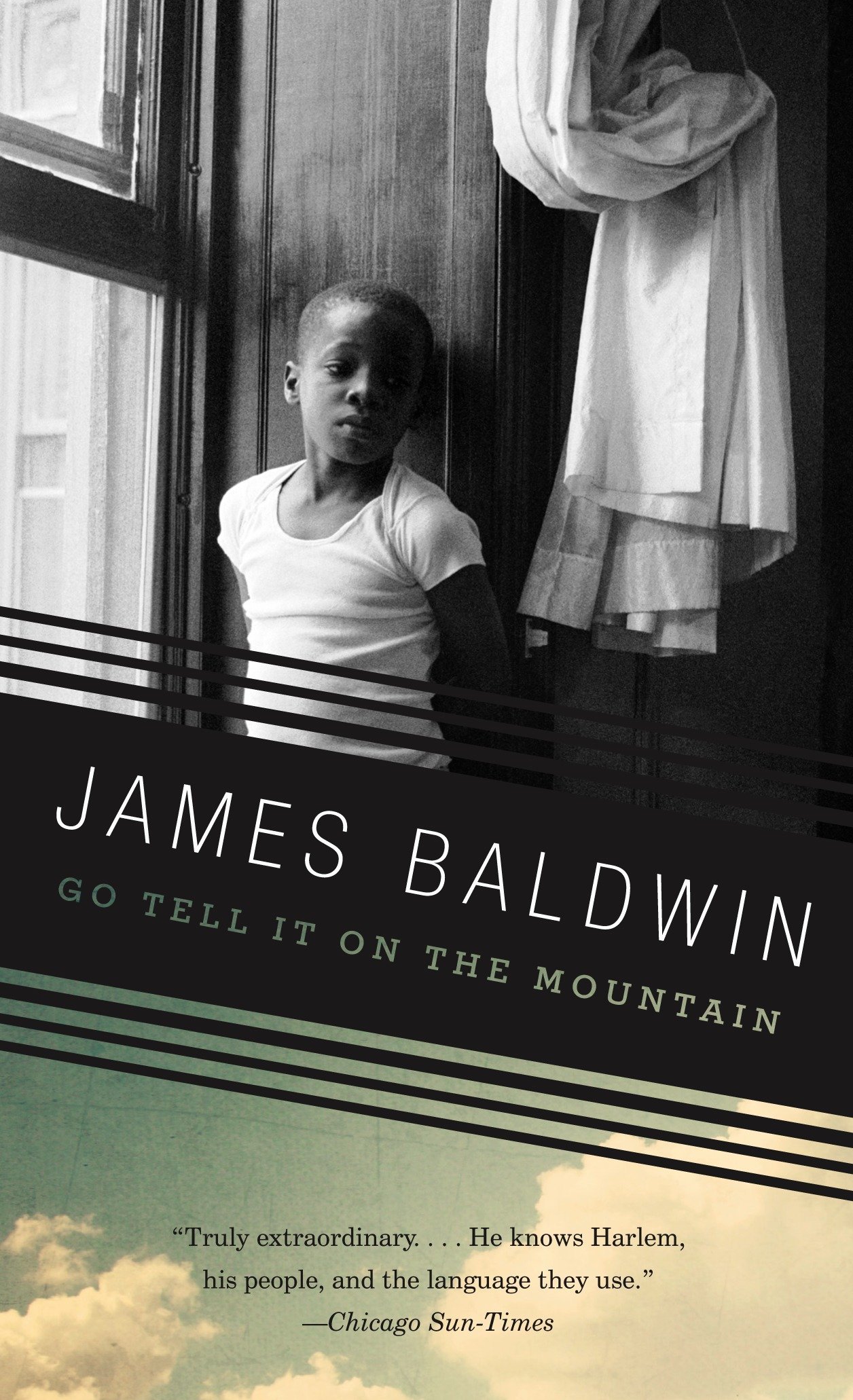
Go Tell It on the Mountain - James Baldwin

"With lyrical precision, psychological directness, resonating
symbolic power, and a rage that is at once unrelenting and compassionate, Baldwin chronicles a fourteen-year-old boy's discovery of the terms of his identity as the stepson of the minister of a storefront Pentecostal church in Harlem one Saturday in March of 1935. Baldwin's rendering of his protagonist's spiritual, sexual, and moral struggle of self-invention opened new possibilities in the American language and in the way Americans understand themselves."

This is my second Baldwin and I am again shocked by the brilliance of his work. He writes with such searing prose and honesty to the human condition. An eye opening mix of brutality, rawness, and elegant eloquence. 

Though I must be entirely honest, I was not as blown away by this book as by 'Giovanni's Room' though I think that was because of my own personal experience. I related more to the struggles of Giovanni's room then to the religious mania and pressure of 'Go Tell It on the Mountain', having not been raised in a religious environment. 

The structure of the book was unique, with most of the action happening in one evening as the family comes to church to pray together and we get to know what each one is praying for and their backstory as to how they got to this point. Allowing Baldwin a  huge amount of range explore different themes in different peoples lives, and we come to understand, if not condone everyone's actions.  The screaming hypocrisy of Gabriel’s brand of evangelism made me absolutely furious, but I also felt very moved by his story. And I loved Florence and Elizabeth's stories; their lives were hard and bitter, and the strength and sacrifice they needed to make to survive was impressive and heart-breaking. We tend not to think much of parents before they were parents, and I am always fascinated with the exploration of their own lives and sufferings, and how all that stuff inexorably trickles down: Baldwin may have never forgiven his father, but in this book, he gives Gabriel the grace of having his pain and guilt acknowledged.

This book does not have an agenda on race, religion, class, violence, or sexuality. This book is about these things, but they are never in the driver's seat, because the characters are. The characters are the glue between the intersection of these numerous difficult themes, and they show how out of these things arises an insurmountable complexity, an ambiguous amorphous blob of feelings.

I must speak about the amazing amount of attention and quality of the actual words that make up Baldwin's sentences. His prose is absolutely masterful, mimicking the flow and imagery of sermons. It give the whole book a weight and seriousness, and it also shows how imbedded these characters are within the church. The vocabulary of faith has worked itself into their mental spaces. 

Age Rating 15+. Some very serious themes such as abuse, rape, race, lynching, sex, addiction and abandonment. There is also some strong language. 

Monday, 16 May 2022

The Discovery of Witches (All Souls #1) - Deborah Harkness

"Deep in the stacks of Oxford's Bodleian Library, young scholar Diana
Bishop unwittingly calls up a bewitched alchemical manuscript in the course of her research. Descended from an old and distinguished line of witches, Diana wants nothing to do with sorcery; so after a furtive glance and a few notes, she banishes the book to the stacks. But her discovery sets a fantastical underworld stirring, and a horde of daemons, witches, and vampires soon descends upon the library. Diana has stumbled upon a coveted treasure lost for centuries-and she is the only creature who can break its spell."


This book genuinely put me into a reading slump. I really tried to persevere, as the plot hooks of what was in the manuscript and what happened to Diana's parents kept me engaged. However, I...I just couldn't anymore and actually had to put it down. Harkness's glacial pacing and repetitive/obsolete descriptions where enough for me to start clocking out. The descriptions of multiple wines, intimate knowledge of Diana's exercise routine and a Wattpad like fascination while wardrobe descriptions padded this book far beyond it's warranted length. I am no enemy to atmosphere, slow pacing or heavy descriptions. I have read my fair share of 19th century novels to fine with that. But none of this description actually does anything, it serves little to no narrative purpose. 

What irritated me the most, however, was Harkness's characterisation. At first, I thought that this book was going to be an intelligent Twilight for grown-ups. The female lead is Diana, is a highly intelligent woman and well respected in her field. She’s also the daughter of two powerful witches who were murdered when she was seven years old. The main character wasn't helpless, thought for herself, didn't immediately adore her bloodsucking, murderous stalker or find his abusive behaviour endearing, and didn't seem interested in losing her entire identity to the first good-looking guy who wanted to eat her. A rebuttal of Twilight, almost.

But no. Despite Diana's increasing Mary Sue-ishness as she develops every witch ability ever known, she must constantly be rescued and protected by Edward, er, Matthew.

Matthew, meanwhile, is a complete jackass. (Excuse my French) Trotting out the obnoxious "pack mentality" trope so often used in "paranormal romance" (a genre that really, really needs to be marked better so that those of us looking for "urban fantasy" won't be blindsided every damn time), Matthew is neatly absolved from all responsibility for his sexist insistence that Diana obey him as her husband and for his volatile, potentially murderous temper if and when she doesn't comply. Who doesn't want a hyper controlling boyfriend that keeps a huge amount of secrets, keeps important information away from you, uses his temper to make you obedient and says, “I might not be able to control myself if you step away” after a first kiss. Diana is the otherwise highly intelligent woman who acts like a child whenever she’s in his presence. She has to be bullied and bated into using her powers, and saved time and time again by Matthew. Despite Matthew’s continual marvelling about how powerful and strong she is, her strength is barely in evidence.

It is really unfortunate. I am a sucker for academic settings (having lived in Oxford myself), urban fantasy and the general aesthetic of this book was wonderful. Large French castles, ancient libraries, large dysfunctional vampire families (wish there was more of that), horse riding. All right up my alley, with the potential to be something really amazing. A fusion of urban fantasy and dark academia. Unfortunately Harkness's characters and pacing completely threw me off. 

Age Rating 16+. Violence, sex, threat, torture (very tame though.)

Saturday, 16 April 2022

Rubyfruit Jungle - Rita Mae Brown

"Molly Bolt is a young lady with a big character. Beautiful, funny
and bright, Molly figures out at a young age that she will have to be tough to stay true to herself in 1950s America. In her dealings with boyfriends and girlfriends, in the rocky relationship with her mother and in her determination to pursue her career, she will fight for her right to happiness. Charming, proud and inspiring, Molly is the girl who refuses to be put in a box."

An objectively good book with some really, really questionable sections. 

A fun and interesting coming of age story with a spunky main character, Molly, who never accepts an answer or societal control, kicks against all her disadvantages and the bigotry facing her. It was genuinely funny too - the description of the children's nativity play in the local school is priceless. Overall I enjoyed reading this book, especially the childhood part. However there were some definite issues. 

First of all, everything is too contrived. Everyone Molly meets just happens to become gay. Things happen very easily for Molly, she is homeless in New York than the next day finds a cheap apartment? I mean I wasn't in New York in the 70s, I wasn't around at all in the 70's, but that seems a little unrealistic. 

I enjoyed the main character’s strength of self and unapologetic intention to live her life only for herself without a care for what the world thinks. However, there is unfortunately little nuance, little moments of understanding and in truth, little sense of a full character. Molly's a one-dimensional saviour, who has no negative characteristics accept for the fact that she seems to be a bit of a bitch. She never seemed to care about any of the women she slept with. Her definition for being a lesbian seemed to be that she enjoyed sex with women more than she did sex with men, which I mean...I guess that's one definition. She never seemed to fall in love or actually care about anyone.

Now, the parts I had some real issues with. The aggressive putting down of butch lesbians, basically amounting to butch women being just like men. Molly literally says, why would she wish to be with a butch women, if she wanted a men she would sleep with a man. So yeah.... Then goes on to characterise butch women as ugly, stupid and grotesque. There is also the putting down of older lesbians. They are characterised as predatory and deeply sad. I am of course not here to say that there are no predatory, stupid, ugly people within the community, obviously they are. But for that to be all that you show in a book? Molly is the only "good" queer. It actually feels really homophobic for a gay book. 

There is also a rape scene (with Molly being the attacker) or at least the consent lines where so blurred I really wasn't comfortable with it. And the final cherry on top, - the approval and almost slight endorsement of incest and the assertion that it's "anti-human" to not commit incest to some level. I mean...excuse me, what? I am unsure whether all of these views are the authors, but as the book is semi-autobiographical I am led to believe so. 

I enjoyed the humour, the quirky happenings, the side characters were vivid and writing wasn't bad. It was interesting to read a book so important within the lesbian historical canon. But as a book that has been called so "sex positive", and I am no prude, but I personally don't think rape, incest, infidelity, cheating and sex without any emotions if very healthy or sex positive. 

Age Rating 16+ Sex, homelessness, discrimination, abortion, childhood abuse, death. 

Sunday, 10 April 2022

Giovanni's Room - James Baldwin

"In a 1950s Paris swarming with expatriates and characterized by
dangerous liaisons and hidden violence, an American finds himself unable to repress his impulses, despite his determination to live the conventional life he envisions for himself. After meeting and proposing to a young woman, he falls into a lengthy affair with an Italian bartender and is confounded and tortured by his sexual identity as he oscillates between the two."

I picked this book up on a whim at the library. I had no idea what it was about. I had never heard of it before, and I must be honest, I didn't put the name James Baldwin together with the Civil Rights Activist I was taught about in school. So, I had no idea I was about to read one of best book I have yet read. 

This book unravelled me completely. I felt like my whole body was strung out by the sheer, inexorable weight of this story. During reading, I often found myself having to close the book and just process. Giovanni's Room is one of the rawest, most wounding and open-chested portraits of what it is like to burn with the fires of self-loathing as a result of internalized hate, and to wrestle, every day, from the webbing of a shame that stains, indelibly, yourself and everything you love. 

There is viciousness, lust, loneliness, sensuality, deception, sorrow, tenderness, despair, and ultimately tragedy that makes this book easily one of the top 100 best books I’ve ever read. Every reader will find something of themselves in this book, maybe not the part of themselves that they want to hold up to the mirror, but certainly a fragment, disdainful in nature or worthy of pity, that can not be denied.

It is classified as a "gay book." I think that is a overly simplified grouping, it is a book about doomed love. I do not think that you have to be queer to enjoy or relate to this book. You must only have felt out of place, a stranger in a strange land, to have looked at yourself in the mirror and not liked what you saw. To have felt the deep well of loneliness and meaningless desperation that comes with living as a human. Baldwin explores and expresses the torments of humanity and love, through his achingly beautiful prose that often left me breathless. David is profoundly selfish, and evasive to the attention he receives. He paradoxically wants love but cannot bear the responsibilities that go with it. He is an unlikable man, yet you cannot help but emote with him. You cannot help but feel all of his pain and regret and loathing. 

Truly a haunting read, one that will stay with you long after you have finished it. My review cannot do it justice, I merely urge you to read it. 

Age Rating 16+. An insinuations of rape, murder, execution and prostitution but nothing overt. 


Monday, 4 April 2022

Glimpses of the Moon - Edith Wharton

"Set in the 1920s, Glimpses of the Moon details the romantic
misadventures of Nick Lansing and Susy Branch, a couple with the right connections but not much in the way of funds. They devise a shrewd bargain: they'll marry and spend a year or so sponging off their wealthy friends, honeymooning in their mansions and villas. The other part of the plan states that if either one of them meets someone who can advance them socially, they're free to dissolve the marriage. 
How their plan unfolds is a comedy of errors that will charm all fans of Wharton's work."

Well, Wharton's brilliance is at it again. 

I have heard this story described as a love story, and while an accurate description, I would suggest that it is a touch misleading and strips the story of the many many layers that it possesses. Both as a character study, and as a study of society at a very specific time in history. 

Glimpses of the Moon is a intricate character study of two, actually quite unlikable main characters. Susy is vapid, self absorbed, mercenary and grasping. Nick has a superiority complex though the roof, condescending and hypocritical. Both are prone to feeling that the world owes them something, refuse to work honestly, and look at their wealthy friends with such distain it amounts to loathing while still happily taking their money and aspiring to their lifestyle. These are not nice people. Yet Wharton is able to write them in such a way that you find yourself genuinely feeling for them, despite being aware of how flawed they are.

You become genuinely invested in these characters and you are able, strangely, to relate to them. You feel for Nick when he becomes aware, and then embarrassed, by his inability to financially look after his new wife and how this deeply impacts this view of himself. You see him becoming aware of just how low he has slipped morally, and how he wants to try for something better. You see him grapple with his feelings about Susy. He loves her and in loving her, he wants to be a better person and have a higher standard of moral integrity. Yet as his morals change, he becomes more and more disillusioned with her morally grey mercenary ways. By loving her, he falls out of love with her. 

You feel for Susy who just wants to be financially secure and have pretty things. Is that really such a crime to want, especially as a women with little to no financial mobility by herself, who's only route to power was through matrimony? Could you really hate her for "managing" when what else was really open to her? Did she deserve to be so looked down on by Nick who, up until their marriage, had been "managing" himself in exactly the same way. 

There where moments when I wanted to just slap both these characters and tell them to just god damn communicate better. But, I think that was the whole point. They had to discover what was important to them separately. I loved the ending. It was utterly endearing; so beautifully and painfully hopeful. The realisation literally amounting to money can't buy happiness. Fulfilment doesn't come from material gain but from emotional investment. This was a slightly amusing take, however, coming from a writer whose family supposedly inspired the saying "keeping up with the Jones'" as they where so exceptionally wealthy everyone had to fight to keep pace with them.  

I am also honour bound to discuss Wharton's writing. She just blows me away. Her descriptions of Susy and Nick's acquaintance are brilliant. I was especially struck with her characterisation of Streffy. Wharton's insights into the human psyche and the foibles of society are stunningly handled and nuanced. Everyone is multi faceted and achingly human. I truly cannot recommend enough, though I must warn you it is an emotionally taxing book and deserves a slow and thoughtful perusal. 

Age Rating 15+. Nothing untoward, though the writing style might be a little tough for a younger audience. 

Monday, 14 February 2022

By Light Alone - Adam Roberts

"In a world where we have been genetically engineered so that we can
photosynthesise sunlight with our hair hunger is a thing of the past, food an indulgence. The poor grow their hair, the rich affect baldness and flaunt their wealth by still eating. But other hungers remain...

The young daughter of an affluent New York family is kidnapped. The ransom demands are refused. Years later a young women arrives at the family home claiming to be their long lost daughter. She has changed so much, she has lived on light, can anyone be sure that she has come home?"

I was drawn to this book initially by the very interesting premise. I am also willing to admit, here and now, that the cover totally sucked me in. An art deco sensibility is definitely the way to make me interested in starting your book.

The main idea is that science has produced a mechanism where people are able to gain all their energy from sunlight, thanks to a bug that makes their hair capable of photosynthesis. All they need to live is water and a few essential nutrients. A clever idea, certainly, but where Roberts triumphs is in exploring the many unexpected implications of this change. The absolute heart of what makes science fiction. 

One implication considered is that for the first time ever it's possible to have a group of people who have literary no money at all.(Besides slaves obviously.) A group of people that the wealthy can argue don't need to be paid in money. Making them not just poor, but literally penniless. Roberts also examines the possibilities for male/female distinctions (though I will be honest this sounded extremely far fetched), and how a small group of wealthy people might consider those who have the special hair to be a subspecies, and begin to conspicuously wear their hair short to emphasise their extreme wealth. 

Something I thought was clever on Roberts part is that he creates a world in which the wealthy and the poor both realistically portray their stereotypical attributes. The poor sit around all day doing nothing, lazy, sex obsessed, violent, contributing nothing. But for reasons that make sense in the world. The poor, because they are surviving on light alone, have no extra energy to do anything. They survive but are skeletal and easily drained, fighting for the one resource they still need. Water. 

The wealthy, on the other hand, are cut off from reality, selfish and wasteful. They literally make the labouring forces into skeletons and rob them of the ability, literally and metaphorically, to eat. 

The book is divided into four parts, each seen from a different (but linked) individual's point of view. At the heart of the book is the story of a privileged family whose daughter is taken from them on a skiing holiday. They assume initially she has been taken as a hostage, but the authorities gradually explain that something much darker is behind it.

The one fault I would say that the book has is that the forth segment, which is the longest, seen from the viewpoint of the captured daughter, is the least effective. It's partly because the environment she is in forces a slow, plodding development, with occasional dramatic outbreaks of violence and rape, but also because it just doesn't work quite as well as the other sections. I am not quite sure why this is. It's undeniably good, but the others are brilliant. Strangely I absolutely adored the Mother's Chapter. Roberts excels at creating a unique inner voice with each POV, something that many authors struggle with. The mother's internal monologue is so inherently selfish and manipulative. Full of privilege, victim complexes and entitlement. But she is blind to it. We as the readers, not only see her for what she is, but are also made to see the world through her warped eyes and are brough to understand how horrific people can genuinely believe themselves to be good people. Roberts makes use of much of today therapy/self help speech, parroting wealthy celebs self love talk making this character instantly recognisable and all the more horrifying. 

I would also like to point out how wonderful Roberts prose is. There aren't many sci-fi authors that employ such poetic and startlingly beautiful writing. Though it was rambling at points, it actually felt coherent in the world. A boredom in the parent's chapters as they ramble on with no real reason for existence due to their wealth, nothing to strive for. And a surrealist introspection caused by deep trauma in the daughter. 

Age Rating 18+. Violence, death, murder, rape, paedophilia, kidnapping, assault. 

Sorcery of Thorns - Margaret Rogerson

"All sorcerers are evil. Elisabeth has known that as long as she has
known anything. Raised as a foundling in one of Austermeer’s Great Libraries, Elisabeth has grown up among the tools of sorcery—magical grimoires that whisper on shelves and rattle beneath iron chains. If provoked, they transform into grotesque monsters of ink and leather. She hopes to become a warden, charged with protecting the kingdom from their power.

Then an act of sabotage releases the library’s most dangerous grimoire. Elisabeth’s desperate intervention implicates her in the crime, and she is torn from her home to face justice in the capital. With no one to turn to but her sworn enemy, the sorcerer Nathaniel Thorn, and his mysterious demonic servant, she finds herself entangled in a centuries-old conspiracy. Not only could the Great Libraries go up in flames, but the world along with them."

I enjoyed this book. It was a fun and aesthetically unique fantasy romp. The characters, while not unique in their archetypes, where funny, relatable and loveable. Rogerson's dialogue between protagonists is witty and suitably banter-y. Nathaniel Thorn was easily my favourite character being wonderfully sarcastic and also bisexual. Yay representation! Rogerson's writing is also brilliant. Her rendering of scenes left me breathless with detailed images in my mind that I would want to paint if I had any artistic skill. Small interactions deepen characterisation and there are many imminently quotable passages, with much of Silas's dialogue being truly terrifying.  

Plot wise, it was predictable, which is not exactly a bad thing and there were enough plot twists to keep me engaged. The concept of this book was astonishing, the world building was interesting and truly the selling point. The atmosphere of the Libraries, the steampunk world, the statues coming to life, ladies with swords down their dress, demon footmen. Just impeccable. All of it was just excellent. 

However what let me down was that some plot elements just weren't explained, or explained really really badly. I mean the reason that the books listen to Elisabeth, the big reveal...is because she grew up in a Library. That's it. All the previously murderous books suddenly treating her like she is a beloved niece...is because she grew up in a Library...I am sorry but what! That is such a boring and lazy reason and it really felt like Rogerson didn't really know what to say. 

I appreciated the unique concept and world that she tried to convey. I was aware of her intentions and inspiration with the whimsical world building, snarky love interest, secretly soft demon, etc. Unfortunately there was no romantic chemistry between the couple at all, (they felt like siblings to me), and the villain is one-dimensional and moustache-twirling. There are definite merits to this book and I appreciate the effort to create a unique type of fantasy story, and while it wont win any awards, it was fun and enjoyable. 

Age Rating 14+ Nothing untoward. Some low level fantasy violence and kissing. 


Saturday, 1 January 2022

The Age of Innocence - Edith Wharton


Edith Wharton’s masterful portrait of desire and betrayal during the
sumptuous Golden Age of Old New York, a time when society people “dreaded scandal more than disease.”

This is Newland Archer’s world as he prepares to marry the beautiful but conventional May Welland. But when the mysterious Countess Ellen Olenska returns to New York after a disastrous marriage, Archer falls deeply in love with her. Torn between duty and passion, Archer struggles to make a decision that will either courageously define his life—or mercilessly destroy it."

A truly mesmerising and brilliant book. Easily one of my favourite books...ever. 

The inhabitants of this hothouse of New York society is built on wealth, life is lavish, easy and comfortably cushioned, but this world may just as well have been covered in a blanket of cobwebs, as the lives are so sedate and uneventfully dull, despite their opulent surroundings, they appear colourless and motionless. Wharton fills the book with heavy and intricate descriptions that make you feel as oppressed by status and things as the characters are.

It is ultimately a tragic tale that Wharton weaves, and yes, as with a lot of classic fiction based around love, it's told with air of melancholy because this love is one that doesn't really get off the ground. For Newland Archer, the leading male character, there is an imagining of an alternative existence to the one that convention has pressed upon him, he has built within himself a kind of sanctuary for his secret thoughts and longings. Within these walls are his bride to be, May Welland and Countess Olenska, who would change his whole world.

Archer is a perfect product of Old New York, a member of one of the most prominent, historic families. He is engaged to the young, beautiful, and equally impeccably bred May Welland, who is sweet sweet-natured but naive. After twelve years away returns the Countess Ellen Olenska, May’s cousin, who through no fault of her own upsets the balance of Newland's life. She is beautiful, vivacious and intelligent, whose long period of living in more liberal European surroundings has made her innocent of the nonsensical, unspoken rules of the society she has reentered, and incapable of maintaining the shallow facade of her female relatives. Newland feels a life of quiet misery lies ahead, and despairs over Olenska as they grow closer and closer, because he is forced, by his own realisation, to know how Ellen will be treated if she dares to divorce her husband, and advises against it, even though he is devoured by love for her.

Wharton mesmerises with the sheer depth of emotion, pain, and frustration bearing down on Newland's shoulders. 
Yet much of the romance seems to by symbolic. Both Newland and Countess Olenska represent something to the other. To Newland, Olenska represents a freedom from restraints and convention that is constantly bearing down on him and suffocationg his life of any meaning. To Olenska, Newland represents her idealised comforting fantasy of the chivalrous New Yorker. They cannot be together, not only because of societies condemnation, but because if they acted on their desires the spell that each had woven around the other would snap. This this romance becomes so much more important then merely a personal experience. It is emblematic of the changes of society and the inner conflict of our own ideals. 

It's as important as it is beautifully written. Wharton casts an eye over the New York society, both disdainful and affectionate. There are truly, as strange as it sounds, laugh out loud moments in this book. Where Wharton's razor sharp wit and brilliant command of the English languages cuts through human foibles in a highly amusing way.

Incorporating issues of female emancipation into the story, never has the idea of a woman enslaved by marriage and convention seemed so unattractive from a male perspective. Newland Archer is full of modernity and the call of new ideas, while is still often trapped in the same traditions and stuffy morality.

It's hard to read the ending of this book without feeling emotional, but the exact emotion may differ with your interpretation. Ambiguity reigns supreme as this novel finds its close and even the coldest of unromantics will surely have their hearts pulled along. One of my favourite tragic love affairs.

Age Rating 14+ Nothing out of the ordinary and the language is surprisingly accessible for the time period. 


The Price of Salt - Patricia Highsmith

"Arguably Patricia Highsmith's finest, The Price of Salt is the story
of Therese Belivet, a stage designer trapped in a department-store day job, whose salvation arrives one day in the form of Carol Aird, an alluring suburban housewife in the throes of a divorce. They fall in love and set out across the United States, pursued by a private investigator who eventually blackmails Carol into a choice between her daughter and her lover."

The first word that comes to mind after reading this novel? OddA deeply moving book, however far more complex and nuanced than the lesbian romance story that it has been marketed as. 

There is an ambiguity to the relationship between the women, between love, obsession, mutual understanding and the projection of fantasies. However it stands apart from other novels of its type in the 50's as it is explicit that these women are more than friends. It allows the women to have a complicated relationship, without it being able to be brushed off as merely "galpals." 

However, this book felt more like a character study of Therese, a women so frustratingly passive that she functions more as a narrator than as an actual character at times. The relationship feels more like a first erotic awakening on Therese's part than an actual romantic meeting of souls. Now, this is by no means a bad thing and is actually something I enjoyed about the book. However I feel that this could have been further\better explored by Therese leaving Carol for a women who she could love on both an emotional and physical level. 

The writing style is something that really drew me to the novel, easily my favourite part. It is poetic and sensitively written (at times it's almost claustrophobic in its details) and an intriguing portrait of 50's repression, conformity and depression. There where some passages that, despite the time difference, so accurately evoke the feeling of helplessness and claustrophobia of normal life that you only become aware of when you are slightly apart, slightly other. However the road trip section dragged for me, it became repetitive and pointless. 

However I just can't sing this books praises. For, while on an intellectual level I could enjoy it, emotionally it was a slog. I can't read Therese as anything but a pathetic petulant child with an obsessive fixation on someone she barely knows. I don't understand the swooning over Carol when, to me, she's written so nebulously that it's almost as if she isn't even present in the novel, let alone present in the relationship with Therese. Possibly that is the point, to show that Therese is more in love with the perceived idea of Carol, rather than the actual person, however this just makes the ending all the more irritating thematically. I find both of them wholly unlikable and unrelatable. 

Age Rating 15+. Nothing untoward, however 

Thursday, 28 October 2021

LOT - Bryan Washington

"Stories of a young man finding his place among family and community
in Houston, from a powerful, emerging American voice.

In the city of Houston - a sprawling, diverse microcosm of America - the son of a black mother and a Latino father is coming of age. He's working at his family's restaurant, weathering his brother's blows, resenting his older sister's absence. And discovering he likes boys.

This boy and his family experience the tumult of living in the margins, the heartbreak of ghosts, and the braveries of the human heart. The stories of others living and thriving and dying across Houston's myriad neighbourhoods are woven throughout to reveal a young woman's affair detonating across an apartment complex, a rag-tag baseball team, a group of young hustlers, the aftermath of Hurricane Harvey, a local drug dealer who takes a Guatemalan teen under his wing, and a reluctant chupacabra."

I feel this is a truly important book, that highlights difficult questions and intersections of identity, but one that I didn't enjoy. It's a short book with just 220 pages which hold a number of interconnected short stories that are all set in Houston, Texas. We always circle back to the same young narrator and his family but his chapters are interspersed with those of other people in the neighbourhood, usually also young, queer men. I really enjoyed the first few stories since they skilfully set the tone, introduced me to the narrator's world and created a sense of belonging. But the more I read the more settled became the feeling of hopelessness and isolation. The characters are lost, don't dare to dream, have nowhere to go and become cold, cruel and bitter. And what is even worse is knowing that many of these stories are real. 

While I didn't love all of the stories, some really stuck with me, including: "Alief," in which a community reveals a neighbour's affair to her husband but is unprepared for the destruction that this revelation might cause. This one really stuck with me, and I just adored the choice of writing the apartment block as if itself was a living breathing entity. However, much of the prose was quite raw and unbeautiful. 

For some reason I did feel emotional distance from these characters. I’m still trying to figure out where that distance comes from – perhaps it’s because our narrators are men and that distance is Washington showing how toxic masculinity, racism and the brutality of trying to survive in a system designed against you has come to harm men of colour's emotional landscape. Because none of these characters where even close to lovable, or even nice, really.

Age Rating 16+. Mature content. 


Wednesday, 28 July 2021

Ninth House (#1) - Leigh Bardugo

"Galaxy “Alex” Stern is the most unlikely member of Yale’s freshman
class. Raised in the Los Angeles hinterlands by a hippie mom, Alex dropped out of school early and into a world of shady drug dealer boyfriends, dead-end jobs, and much, much worse. By age twenty, in fact, she is the sole survivor of a horrific, unsolved multiple homicide. Some might say she’s thrown her life away. But at her hospital bed, Alex is offered a second chance: to attend one of the world’s most elite universities on a full ride. What’s the catch, and why her?

Still searching for answers to this herself, Alex arrives in New Haven tasked by her mysterious benefactors with monitoring the activities of Yale’s secret societies. These eight windowless “tombs” are well-known to be haunts of the future rich and powerful, from high-ranking politicos to Wall Street and Hollywood’s biggest players. But their occult activities are revealed to be more sinister and more extraordinary than any paranoid imagination might conceive."

I really enjoyed this book, it was right up my alley. Secret Societies, Old Universities, Magic and Academia, Ghosts, Magic Tattoos, Tradition and the "Old Boys Club" being infiltrated by someone who definitely doesn't traditionally belong there. It was a bit slow to start but I, personally, enjoy slower paced books. Bardugo's atmosphere building is top notch and her plot kept me guessing and interested. There are also some really stunning writing/ aesthetic moments that, if I had any drawing skills, I would love to draw. The dialogue was fun and snappy. The character's a good mix of cliché and unique. 

I am not very fond of Alex’s character just yet, she’s indeed a hard girl to love but I think she might grow on me after a while. I already love her wits and confidence so I just need another push to be sure I love her.

I feel that Leigh Bardugo definitely seems more suited to writing more adult slanted content. There is no YA, which seems to have come to mean tweens and up, content here, okay. This really is young ADULT. 

If this book is one thing, it's violent. There are some graphic scenes that show sexual abuse, rape, drug addiction and the sexual abuse of minors. There is trauma and pain and it's not glossed over. That said, it isn’t the grimmest, or bleakest book I’ve ever read. In fact, Bardugo sometimes tries too hard for big, dramatic horror, and the violence comes off as gratuitous, her ghosts sometimes too chain-rattling to believe. Ninth House is about all kinds of trauma, yet I found that the consequences of such a monumental thing are barely brushed upon. The novel is rife with flashbacks, seen through Alex’s eyes as she passively witnesses the horrifying events of her past, but her trauma-suppressed memories seemingly only resurface whenever it's convenient for the plot, and without much of a statement being made besides. And that occasionally struck a sour note.

There’s a lot going on in this book. It is something hard to get into because the beginning is extremely confusing. The action is quite slow and not necessarily that complex, but somehow, until the end, there is something there. Something that leaves you thinking that you actually really enjoyed it. I am keen to read the second instalment when I think the magic aspect of the series will also come into it's own and we will get a better understanding of the characters. 

Age Rating 17+. As said above, quite a brutal book that includes no small amount of abuse. 

Tuesday, 29 June 2021

The Starless Sea - Erin Morgenstern

"Zachary Ezra Rawlins is a graduate student in Vermont when he
discovers a mysterious book hidden in the stacks. As he turns the pages, entranced by tales of lovelorn prisoners, key collectors, and nameless acolytes, he reads something strange: a story from his own childhood. Bewildered by this inexplicable book and desperate to make sense of how his own life came to be recorded, Zachary uncovers a series of clues—a bee, a key, and a sword—that lead him to a masquerade party in New York, to a secret club, and through a doorway to an ancient library hidden far below the surface of the earth. What Zachary finds in this curious place is more than just a buried home for books and their guardians—it is a place of lost cities and seas, lovers who pass notes under doors and across time, and of stories whispered by the dead. Zachary learns of those who have sacrificed much to protect this realm, relinquishing their sight and their tongues to preserve this archive, and also of those who are intent on its destruction. Together with Mirabel, a fierce, pink-haired protector of the place, and Dorian, a handsome, barefoot man with shifting alliances, Zachary travels the twisting tunnels, darkened stairwells, crowded ballrooms, and sweetly soaked shores of this magical world, discovering his purpose—in both the mysterious book and in his own life."

The Starless Sea is a love letter to literature, story telling as a whole and  to those of us dogged with the invisible burden of unbelonging that sends us out into the pages in search of solace. The writing is truly stunning. Morgenstern's prose is fluid, memorable and painfully beautiful. It kind of reminds me of Laini Taylor's newer works. The overall aesthetic is just spot on too, I wanted to climb into the book multiple times just from the sheer beautifulness of everything being described. 

The Starless Sea starts with a fascinating inciting incident. This guy named Zachary finds an old book at his library that tells his story. On a quest to discover why this book tells his story, Zachary soon finds himself in this magical library/world with some magical people. 

However, what follows is a disappointing series of seemingly endless fish-out-of-water scenes as Zachary bumbles along, trying to make sense of this magical place. But even when things started to "come together" in the last 100 pages or so, I still had no idea what was going on. I constantly asked "but what is the point?" while reading this book and never, even at the end, got a satisfactory answer. Who are the Owls, who are the bees, why does the starless sea exist, why does it rise or sink? There was also no antagonist or central conflict. Again, I'm utterly confounded. Without an antagonist or a cohesive plot I am reading beautiful meaningless prose. 

But I am going to shock everyone now... I didn't mind being confused hugely. I think each person could read this book and come away with a hugely differing moral or take. Maybe the bees are God, maybe they are the first story tellers and stories make the world? Who knows? Maybe that was Morgenstern's point. Maybe this is a prolonged show of the mailability of stories and their meanings. If so she was very brave and I can see this being incredibly frustrating for many readers, myself occasionally included. 

However the one thing that did really grate on me was the irritating love story. I didn't buy Zachary and Dorian's relationship for a second. They kind of saved each other's lives once or twice, but never had any time to develop a deep connection. They spent an evening drinking wine and reading together, (and by "reading together" I mean reading different books in the same room together) but had no other significant interactions. They never flirted or talked to each other more than a few sentences. Then all of a sudden Dorian confesses to Zachery very dramatically.  Uh, what??!? At this point in the book, I wasn't even sure that Dorian was into men and liked Zachary, let alone was in love with him. It is hinted at that Zachary and Dorian are meant to be together because of some prophetic nonsense, but my god, what a cop out. Throw some scenes of them getting to know each other with some cute banter in this huge book so that I can believe they are in love.

Age Rating 14+ Nothing inappropriate.  

Thursday, 25 March 2021

My Dark Vanessa - Kate Elizabeth Russel

"Exploring the psychological dynamics of the relationship between a
precocious yet naïve teenage girl and her magnetic and manipulative teacher, a brilliant, all-consuming read that marks the explosive debut of an extraordinary new writer.

Alternating between Vanessa’s present and her past, My Dark Vanessa juxtaposes memory and trauma with the breathless excitement of a teenage girl discovering the power her own body can wield. Thought-provoking and impossible to put down, this is a masterful portrayal of troubled adolescence and its repercussions that raises vital questions about agency, consent, complicity, and victimhood."

This book was difficult. Difficult to read, and even more difficult to determine how I felt at the end. 

How do you best write about a fictional love affair between a teacher and a 15-year-old student that is actually a predatory relationship? There are no easy answers to that question but that is what happens in My Dark Vanessa which alternates between 2000 and 2017 as we see how Vanessa Wye is groomed and then raped by her teacher Jacob Strane. We see the repercussions she must deal with as an adult who does not allow herself to realize that the relationship was, in fact abusive. We see how a child is forced to carry the responsibility the adults around her should have assumed themselves. The delicate and fraught nature of adolescence is captured well.

This book is definitely very, very well-written and the first half is well paced. There is a strong sense of place— the landscape, the sparseness. The prose is tight and careful, intimate and descriptive. The protagonist, Vanessa, is fully realized and the author does a good job of showing Vanessa’s struggle to face what she experienced. Her point of view and how it shifts over time is expertly managed and feels honest. You see how pernicious this kind of abuse is because it makes Vanessa doubt herself and lose herself and see herself, rather than the predator, as the problem. There is an interesting and relentlessly claustrophobic quality to the prose. You want to escape the quiet horror of Vanessa’s story while also wanting to see how it all ends, if she is going to be okay. You want there to be a freeing moment of clean air without knowing if you will get it.

There is some interesting cultural context developed through pop culture references, Lolita, and the #MeToo movement. I suspect we are going to see quite a few novels doing this over the next several years as writers try to distill into fiction what has been happening culturally with regard to sexual violence. There were ways the people in Vanessa’s life responded to her that were infuriating and inadequate and that is, all too often, how these things go.

The book does run too long. After about 250 pages, there is a thematic repetition that doesn’t serve the novel well. Vanessa bites her cheek constantly. It’s like, girl, is there anything left on the inside of your mouth??? Vanessa is fully realized but most of the other characters don’t get as much depth, though they really should. 

The real challenge I had with this book is that at times, the abuse felt romanticized, eroticized. It gave me pause. As a mature reader, the way the relationship is described is quietly horrifying. However I am unsure if a less mature reader would fully pick up on the horror. As the novel goes on there were so many rape scenes (and I will always call it rape because that’s what it was), that it just felt… somewhat gratuitous. And, I suspect, that’s kind of the point, that Vanessa, particularly at fifteen, was torn between love and repulsion, that she was shaped into someone who would see the situation as romantic while, with the distance as readers, we understand the situation as appalling. Strane is clearly a horrible piece of shit. Russell makes that crystal clear. But… I don’t know. Does she go far enough?

My Dark Vanessa is certainly not an easy book and I get why some readers have found it to be over the top regarding the descriptions of abuse that the main character faces. I don’t share that same opinion entirely, but there were moments when I questioned the sheer number of rape scenes that Kate Elizabeth Russell chose to include, and/or the gratuitous level of detail they held; because even without explicitly showing the brutal assaults on Vanessa’s autonomy, her “relationship” with Strane was awful and his paedophilia was always obvious to the reader, as was its effect on 15 y/o Vanessa.

Age Rating 18+. The highest rating I think I have ever given a book. This is certainly not appropriate for younger readers. 

Tuesday, 9 February 2021

A Slap in the Face: Why Insults Hurt , And Why they Shouldn't - William B Irvine

"Insults are part of the fabric of daily life. But why do we insult
each other? Why do insults cause us such pain? Can we do anything to prevent or lessen this pain? Most importantly, how can we overcome our inclination to insult others?

In A Slap in the Face, William Irvine undertakes a wide-ranging investigation of insults, their history, the role they play in social relationships, and the science behind them.  Irvine considers the role insults play in our society: they can be used to cement relations, as when a woman playfully teases her husband, or to enforce a social hierarchy, as when a boss publicly berates an employee. He goes on to investigate the many ways society has tried to deal with insults-by adopting codes of politeness, for example, and outlawing hate speech-but concludes that the best way to deal with insults is to immunize ourselves against them: We need to transform ourselves in the manner recommended by Stoic philosophers. We should, more precisely, become insult pacifists, trying hard not to insult others and laughing off their attempts to insult us."

A very light hearted and humorous take on the meaning of insults as seen through the prism of the authors love of Stoic philosophy. Irvine  manages to succinctly make a case for getting off the social hierarchy treadmill. As he says, "People place great value on other people's opinions of them. Insults hurt so much because they are reminders that our social standing is not as high as we would like it to be." But what if we don't care about our social standing? What if we realize that social standing is an artificial construct? If we have chosen, and are confident, in the right values, insults can't harm us. Don't try to control things over which we have little or no control, such as other people's opinions of us. Spend time, instead, on choosing to do good and virtuous things. 

I found the latter parts of the book, which discuss responses to insults, much more interesting that the first part of the book, which categorizes the types of insults. I understand that, as a philosopher, it's important for him to cover all the bases, but I found the early section to be dry, bordering on irritatingly repetitive. The entire book is certainly not a deep dive, but is a good "pop-philosophy" book. An okay-ish introduction to the very amazing world of Stoic Philosophy and will hopefully get readers interested in further reading.

Age rating 14+ Understandable for a younger audience with occasionally mature content used as examples for the horror insults can wreak. 

Tithe (#1) - Holly Black


"Sixteen-year-old Kaye is a modern nomad. Fierce and independent, she
travels from city to city with her mother's rock band until an ominous attack forces Kaye back to her childhood home. There, amid the industrial, blue-collar New Jersey backdrop, Kaye soon finds herself an unwilling pawn in an ancient power struggle between two rival faerie kingdoms - a struggle that could very well mean her death."

Yes, Yes I know. Another Holly Black. I am just a sucker for her description of Fae. So first of all, on the good side… the fairies . The way Holly Black draws her fairy worlds and fairy characters is genuinely so imaginative, gorgeous, and… creepy. Every time I dive into one of her books, I find myself both terrified and enamoured with her fairy world. Holly Black always knocks the fairy stories out the park. Tithe is a raw, dark faerie tale in keeping with Black's usual style. While not suitable for younger readers (lots of swearing, torture and violence, and mature themes), I loved its take on the darker side of faerie. Black's understanding and vision for Fairies is excellent and is exactly how I imagine them.  It also deals with faerie themes like Changelings and the knowing of one's True Name very well. 

Roiben had a lot of potential. The idea of being trapped in a different court, sent there by your beloved Queen where she knows you will be humiliated and tortured, but can do nothing about the terrible things you are made to do because they have your true name and have to do everything they say. I mean how absolutely horrific. However he did need to be fleshed out more as he did feel a little one dimensional at times. 

Kaye, though, is a bit of a blah main character. I found that she was one of those early YA protagonists who’s written just generic enough that she’s easy to make into a self insert, but at the cost of an engaging motivation or quirky personality. Cool outfits do not a character make. I think this book really suffered from being so short, and I mean it is really really short. The characters don't have time to be developed, and neither does the romance that is probably one of the worst Insta-loves I have ever come across. I just don't see how these two characters could fall for each other - especially in such short amount of time. Kaye saw Roiben once and fell instantaneously in love with his ... hair?  I mean, they know each other for 4 days max, have nothing in common, never really have a heart to heart talk to make us understand what attracts them to each other. 

It dallied with some themes but didn’t stick with them in any meaningful way. I find Black’s work tends to do this often. I’ve never read something by her that had anything to it. It’s all aesthetic for aesthetics’ sake, which is fine but undeniably tiring after a while. A quick, light read with plenty of beautiful descriptions. 

Age Rating 16+ Surprisingly high rating, drugs, sex with dubious consent, domestic abuse, swearing, minor's having sex, torture and humiliation. Other than that,
though completely fine. 


Tuesday, 26 January 2021

Native Tongue (#1) - Suzette Haden Elgin

"Set in the twenty-second century, the novel tells of a world where

women are once again property, denied civil rights and banned from public life. Earth's wealth depends on interplanetary commerce with alien races, and linguists--a small, clannish group of families--have become the ruling elite by controlling all interplanetary communication. Their women are used to breed perfect translators for all the galaxies' languages.

Nazareth Chornyak, the most talented linguist of the family, is exhausted by her constant work translating for trade organizations, supervising the children's language education, running the compound, and caring for the elderly men. She longs to retire to the Barren House, where women past childbearing age knit, chat, and wait to die. What Nazareth comes to discover is that a slow revolution is going on in the Barren Houses: there, word by word, women are creating a language of their own to free them from men's control."

An amazing, amazing concept that I was so excited to see explored in this speculative fiction. As someone that loves learning, and learning about languages, this book sounded right up my alley. It was full of amazing ideas (the creation of a secret language for women who have been oppressed).The standpoint on language reminds me a lot of 1984 and the Newspeak dictionary, the idea that taking away words for certain concepts or creating/encoding words for others can change the way people think and behave and affect whether they have the capacity to rebel against an authoritarian regime. But, it lacked several things, in my opinion, that prevented it from living up to the proclamation: "feminist science fiction classic."

One of those things was characterization. The first one hundred or so pages in the book had no distinct character for the reader to engage with. There are several plot points expounded in male points of view that readers are supposed to be disgusted by (and are disgusted by!. There is one storyline involving a woman, lacking any real depth, killing out of revenge; and then, there is the mention of some other characters who may be important later. That's it.

In my opinion, having no characters with any emotional depth for the reader to latch onto was a serious flaw. It made the pace slow, and frustrated my sense of who or what to believe in in this story.

Another problem I had with this book was the "good guys/bad guys" dichotomy applied by the author. It's simple: All women are good (even the one lady who systematically kills people), all men are bad (even the one guy who appeared to treat a female character like she was equal in intellect and status). I, personally, don't like my contemporary fiction to be so black/white. It is boring, and it is not believable. It narrows the reader's frame of mind and ability to objectively engage with the work. 

Another serious issue I had with this book is the underutilisation of the Aliens. For a book prominently featuring the idea of communication with aliens, it's quite disappointing that there is not one single alien character developed. We don't know how a single alien thinks; what their cultures want, or how or why they are sending representatives to Earth to teach babies their languages. None do any interacting with any of the characters. I thought that the women could learn for the aliens, realise how strange and awful their society was through contact with others. Big missed opportunity....

The final problem that I had with the book was this - the notion that women should have their own language in the first place. Don't get me wrong! I love imagining the subversive power that a secret language has for the oppressed secondary citizen! It was wonderfully done, and very inspiring! But...Elgin, and by extension, her characters, believe that one's native language creates one's reality - how one perceives the world (Sapir-Whorf Hypothesis), and allowing the women in this story to create and use their OWN language will change their reality. I am all for the exploration of that notion. 

The problem with all this is that Elgin really believes - IN REAL LIFE - that women should have a language separate from men. And - in doing so - that we would be essentially better off as separate from them altogether? She believes there are things one can experience as a woman that men could not possibly conceive of. We-ellllllll....I have to disagree. I thought that the language would allow the women to communicate freely, feel autonomy and potentially start a rebellion. Kind of like a women strike. But for the concept that men and women should be permanently separated feels like a terribly cynical view. Misogyny is taught, not inherent. Men can be taught differently. 

Age Rating 16+ Lot of sex references, murder, and infant mortality.