Showing posts with label Athiesm. Show all posts

Tuesday, 28 June 2022

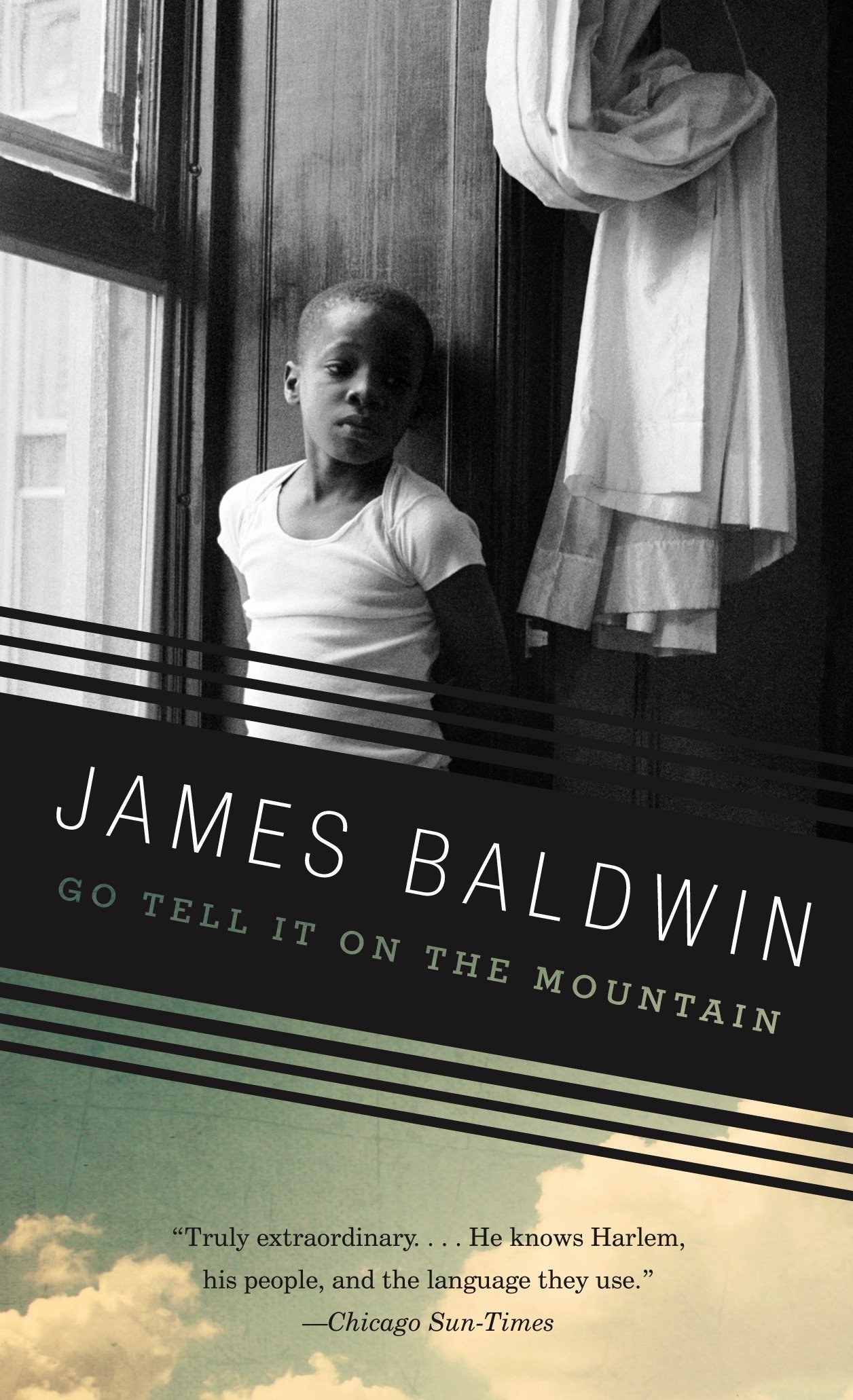
Go Tell It on the Mountain - James Baldwin

"With lyrical precision, psychological directness, resonating
symbolic power, and a rage that is at once unrelenting and compassionate, Baldwin chronicles a fourteen-year-old boy's discovery of the terms of his identity as the stepson of the minister of a storefront Pentecostal church in Harlem one Saturday in March of 1935. Baldwin's rendering of his protagonist's spiritual, sexual, and moral struggle of self-invention opened new possibilities in the American language and in the way Americans understand themselves."

This is my second Baldwin and I am again shocked by the brilliance of his work. He writes with such searing prose and honesty to the human condition. An eye opening mix of brutality, rawness, and elegant eloquence. 

Though I must be entirely honest, I was not as blown away by this book as by 'Giovanni's Room' though I think that was because of my own personal experience. I related more to the struggles of Giovanni's room then to the religious mania and pressure of 'Go Tell It on the Mountain', having not been raised in a religious environment. 

The structure of the book was unique, with most of the action happening in one evening as the family comes to church to pray together and we get to know what each one is praying for and their backstory as to how they got to this point. Allowing Baldwin a  huge amount of range explore different themes in different peoples lives, and we come to understand, if not condone everyone's actions.  The screaming hypocrisy of Gabriel’s brand of evangelism made me absolutely furious, but I also felt very moved by his story. And I loved Florence and Elizabeth's stories; their lives were hard and bitter, and the strength and sacrifice they needed to make to survive was impressive and heart-breaking. We tend not to think much of parents before they were parents, and I am always fascinated with the exploration of their own lives and sufferings, and how all that stuff inexorably trickles down: Baldwin may have never forgiven his father, but in this book, he gives Gabriel the grace of having his pain and guilt acknowledged.

This book does not have an agenda on race, religion, class, violence, or sexuality. This book is about these things, but they are never in the driver's seat, because the characters are. The characters are the glue between the intersection of these numerous difficult themes, and they show how out of these things arises an insurmountable complexity, an ambiguous amorphous blob of feelings.

I must speak about the amazing amount of attention and quality of the actual words that make up Baldwin's sentences. His prose is absolutely masterful, mimicking the flow and imagery of sermons. It give the whole book a weight and seriousness, and it also shows how imbedded these characters are within the church. The vocabulary of faith has worked itself into their mental spaces. 

Age Rating 15+. Some very serious themes such as abuse, rape, race, lynching, sex, addiction and abandonment. There is also some strong language. 

Wednesday, 5 August 2020

The Seed Collectors - Scarlett Thomas


"Great Aunt Oleander is dead. To each of her nearest and dearest she has left a seed pod. The seed pods might be deadly, but then again they might also contain the secret of enlightenment. Not that anyone has much time for enlightenment. Fleur, left behind at the crumbling Namaste House, must step into Oleander’s role as guru to lost and lonely celebrities. Bryony wants to lose the weight she put on after her botanist parents disappeared, but can’t stop drinking. And Charlie struggles to make sense of his life after losing the one woman he could truly love.

A complex and fiercely contemporary tale of inheritance, enlightenment, life, death, desire, and family trees."


A deeply unusual and unexpected book. This offbeat novel about obsession, sex and inheritance is set in Kent in 2011 and stars an extended family of botanists. The concept of a family tree has a more than usually literal meaning here given the shared surname is Gardener and most members are named after plants. We have Great-Aunt Oleander, recently deceased; cousin Bryony and her children Holly and Ash; siblings Charlie and Clem (short for Clematis); and half-sister Fleur, who has taken over Oleander’s yoga centre, Namaste House. The generation in between was virtually lost, perhaps to a plant-based drug overdose, on a seed collecting expedition to the South Pacific. Oleander has left each motherless child one of these possibly deadly seed pods.

First, did I mention the book is saturated with sex? Incest, adultery, illegitimate children, S&M, Internet porn, you name it. But beyond that, the metaphorical language is highly sexualized – bursting with seeds, fertility and genital-like plants. I can’t think when I’ve encountered such oversexed vocabulary. It was unexpected and raw and quite shocking. 

I found the plot very loose. I would say it is my main disappointment. Nothing was really achieved or resolved. There was no momentum or push.  Not all the story lines are truly essential, so the book seems aimless for its final third as it doesn't really know what to do with itself. It definitely could have been shorter and tied together better, perhaps with some flashbacks to the previous generation’s experiences on the island to make the past feel more alive. The spiritual element also remains incredibly vague and a tad shoehorned in, I am still unsure if they where high, crazy or experiencing reality. Although it was a pleasant touch of magic realism along the way in the midst of the raw and brutal character studies. 

Finally on to the characters. They really are the driving point of this book, it really does feel like a long character study. Unfortunately all of these characters are complete unlikable for a variety of different reasons. They are obsessive, cold, angry, stupid, apathetic but all the time so uncomfortably real. I have read some reviews of people commenting that the characters are unrealistic and unlike anybody they know, well then I really envy you. Sure the characters could be said to be boiled down to their key traits but as someone from a large and highly dysfunctional family, the characters and their mannerisms where all too recognisable. 

Despite these reservations, I truly enjoyed Thomas’s unusual writing. She moves freely between characters’ perspectives but also inserts odd second-person asides asking philosophical questions about wasted time and what is truly important in life. I like the range of questions you’re left with as a reader: Is nature malicious? Can we overcome our addictions? How much of who we are is down to our parentage? Does life really just come down to sex? 

Age Rating 15+. Large amounts of sex, drugs, mental illness, alcohol addiction, realistic family dysfunction, abuse and suicide. 


Monday, 4 November 2019

The God Delusion - Richard Dawkins

"With rigor and wit, Dawkins examines God in all his forms, from the sex-obsessed tyrant of the Old Testament, to the more benign (but still illogical) Celestial Watchmaker favoured by some Enlightenment thinkers. He eviscerates the major arguments for religion, and demonstrates the supreme improbability of a supreme being. He shows how religion fuels war, foments bigotry, and abuses children, buttressing his points with historical and contemporary evidence.

The God Delusion makes a compelling case that belief in God is not just wrong, but potentially deadly. It also offers exhilarating insight into the advantages of atheism to the individual and society, not the least of which is a clearer, truer appreciation of the universe's wonders than any faith could ever muster."


This book was a dramatic disappointment that did not live up to the "finally someone has proven religion is poppycock" hype it received. Dawkins fails utterly to tear down any meaningful experience of religion, instead he merely reinforces the petty grudges that some atheists have against religion.

I agree with Dawkins' conclusions, yet I don't find him convincing.His books have threads of argument, but I rarely feel that the metaphors and examples he uses are ultimately useful. He never goes quite far enough, and so I think he falls short of his stated goal of a reader starting this book as a believer, and finishing it as an atheist. It feels more like a book to help confirm atheists. If you're already familiar with these arguments and their implications, then the book will make sense to you--if you aren't, then it's going to feel a bit incomplete.

For example, at one point he talks about the idea of the 'sacred', that there are some things in religion which are not allowed to be discussed, and asks why this should be the case. We are scrupulous about discussing every detail of the rest of our lives, so why does this specific subset get its own special rules?

Unfortunately, Dawkins doesn't provide us with the obvious answer: that every controlling political structure has set certain topics as 'off limits' in order to protect its power. As Orwell explores in 1984, controlling language, controlling what people are allowed to talk about is the hallmark of any tyranny. And lest we forget, various churches have exerted this kind of political power throughout history, and some continue to hold that power today. So, it would be in their best interest to forbid discussion of dangerous ideas that might threaten their power.

Yet Dawkins is certainly familiar with cultural Darwinism, with the way that ideas grow and change within a culture, the importance of 'infectious ideas' that take advantage of the natural fears, hopes, and habits of human beings--this should be all too obvious to the man who coined the word 'meme'. And yet, he isn't working here to make obvious and deconstruct these infectious ideas, to reveal their origins and purpose, and to show why we might hold such beliefs. The psychological element is also almost completely dismissed, focusing solely on the scientific explanation. 

But if his arguments are fundamentally dismissive and incomplete, it seems obvious to me why this would be, looking at the trajectory of his career: Dawkins has put himself in the unenviable position of being a public philosopher. He is a man of ideas which he constantly presents and defends against people who are uninformed, emotionally unstable, and self-assured. Often people miss your point, responding only with the same tired antagonism, the more flippant and distant you can become. You start off reasonable and patient, which is time-consuming, draining, and rarely achieves anything. 


I did not like how he said that inflicting belief in hell on children is as abusive as sexual abuse. I do believe that inflicting the concept of hell on kids is terrifying, and it is abusive to terrify kids, however, does it rise to the level of actual paedophilia? He trots out a letter from a woman who wrote to him to tell him that she was both sexually abused by a priest and tormented by fear of hell, and she claimed that the religious torment was worse. It may well be in some cases, but overall, I don't buy it. Rape of a child is worse, and his case is not strengthened by the comparison.

Overall worth a read as an atheist as it is kind of must - read on the atheist book list. But definitely has to be subsidised by much more further reading. 

Age rating 15+. Complex - ish science and mentions of the gang rape of Lot's daughters. 

Tuesday, 27 August 2019

Homo Deus - Yuval Noah Harari

"Over the past century humankind has managed to do the impossible and rein in famine, plague, and war. This may seem hard to accept, but, as Harari explains in his trademark style—thorough, yet riveting—famine, plague and war have been transformed from incomprehensible and uncontrollable forces of nature into manageable challenges. For the first time ever, more people die from eating too much than from eating too little; more people die from old age than from infectious diseases; and more people commit suicide than are killed by soldiers, terrorists and criminals put together. The average American is a thousand times more likely to die from binging at McDonalds than from being blown up by Al Qaeda.
What then will replace famine, plague, and war at the top of the human agenda? As the self-made gods of planet earth, what destinies will we set ourselves, and which quests will we undertake? Homo Deus explores the projects, dreams and nightmares that will shape the twenty-first century—from overcoming death to creating artificial life. It asks the fundamental questions: Where do we go from here? And how will we protect this fragile world from our own destructive powers? This is the next stage of evolution. This is Homo Deus."
Homo Deus is an attempt to make a sequel to the wildly popular (and actually quite good) "From Animals into Gods" - its main thesis is that in the 21st century, liberal humanism would progress into "techno humanism"; and that humanity's main efforts would be to upgrade humans into godlike cyborg entity. 
In order for transformations to be made, the author argues we need to change our mindset and expectations and maybe even our concept about individualism. While that may be true, I was hoping to hear more about the future, the tomorrow in Harari’s subtitle, than the past. The final quarter of the book did focus on that tomorrow (what the job market might look like, whether man or some people in the job market might end up being completely superfluous, the future role of AIs in our society etc.), but I would have preferred more of that analysis earlier in the book. 
Harari's insights into the uses and future of computer/ human interactions was interesting but not all that original. The insight into some of the current statistics such as suicide and disease was simultaneously uplifting and depressing. The points where well put together and the ideas where shared in a coherent and concise way. 
Age Rating 14+. There is nothing untoward in this book it just has complex technical jargon. If you are younger then the specified age and want to give it a go, go for it.