Showing posts with label POC. Show all posts

Monday, 25 July 2022

Another Country - James Baldwin

"Set in Greenwich Village, Harlem, and France, among other locales,
Another Country is a novel of passions--sexual, racial, political, artistic--that is stunning for its emotional intensity and haunting sensuality, depicting men and women, blacks and whites, stripped of their masks of gender and race by love and hatred at the most elemental and sublime."

It would be overly simplistic to say that this book is about racism. It is, in a way. But it is more broadly a book about human struggle. The struggle against the many manifold issues, pains and inner turmoil that plague the everyday human. It's about people trying to make it work and still getting it all wrong. And that's interesting, no? For a book that came out in 1962, Baldwin is unabashed and runs the whole gamut of human interaction. It is sweet, scary, idealistic, depressing, nostalgic, and sometimes downright ugly. But it's also not overblown or politicized. It never feels like it trying to make a point or tell a lesson. Baldwin is merely showing us humans, dirty, ugly, striving, beautiful humans in all their complexity. A complexity that is often inextricably linked with the social environment around them. 

It is an undeniably sensual book, as all Baldwin's work is to a point. His characteristic style of eloquent brutality and raw sensuality are at once erotic and haunting, each increasing the impact of the other. For me, the main take away of this book was the understanding of the raw sexuality of the human experience. To strip us right back, to take away race, sexuality, gender, class, all we want is to be seen, wanted and needed. That is the basic human need and to deprive us of that is to create monsters of us. 

A deeply impactful book. I cannot recommend it enough though it is at times a tough read. 

Age Rating 17+ Domestic abuse, rape, sexual content, hate crimes, suicide, depression, alcoholism. 

Tuesday, 28 June 2022

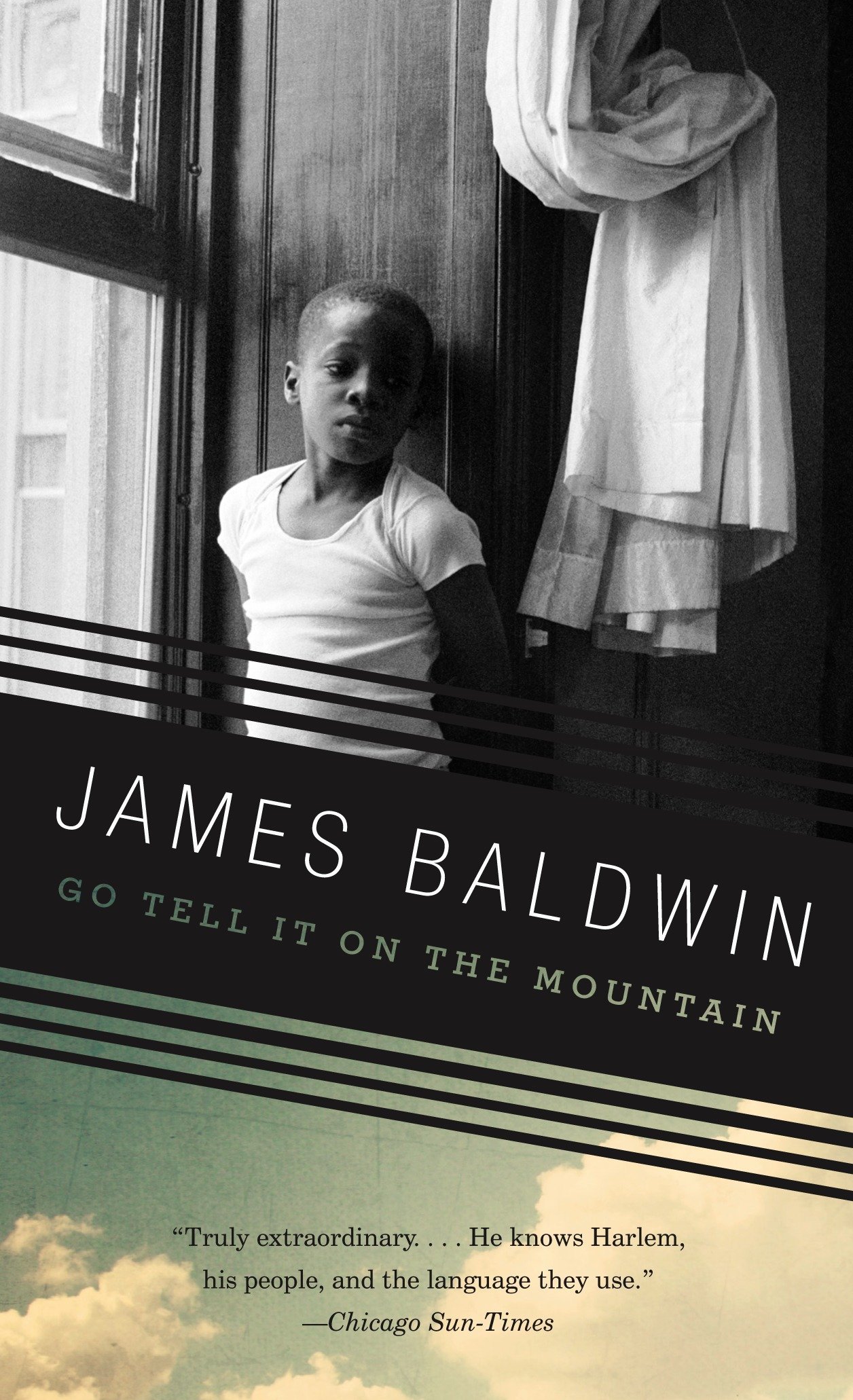
Go Tell It on the Mountain - James Baldwin

"With lyrical precision, psychological directness, resonating
symbolic power, and a rage that is at once unrelenting and compassionate, Baldwin chronicles a fourteen-year-old boy's discovery of the terms of his identity as the stepson of the minister of a storefront Pentecostal church in Harlem one Saturday in March of 1935. Baldwin's rendering of his protagonist's spiritual, sexual, and moral struggle of self-invention opened new possibilities in the American language and in the way Americans understand themselves."

This is my second Baldwin and I am again shocked by the brilliance of his work. He writes with such searing prose and honesty to the human condition. An eye opening mix of brutality, rawness, and elegant eloquence. 

Though I must be entirely honest, I was not as blown away by this book as by 'Giovanni's Room' though I think that was because of my own personal experience. I related more to the struggles of Giovanni's room then to the religious mania and pressure of 'Go Tell It on the Mountain', having not been raised in a religious environment. 

The structure of the book was unique, with most of the action happening in one evening as the family comes to church to pray together and we get to know what each one is praying for and their backstory as to how they got to this point. Allowing Baldwin a  huge amount of range explore different themes in different peoples lives, and we come to understand, if not condone everyone's actions.  The screaming hypocrisy of Gabriel’s brand of evangelism made me absolutely furious, but I also felt very moved by his story. And I loved Florence and Elizabeth's stories; their lives were hard and bitter, and the strength and sacrifice they needed to make to survive was impressive and heart-breaking. We tend not to think much of parents before they were parents, and I am always fascinated with the exploration of their own lives and sufferings, and how all that stuff inexorably trickles down: Baldwin may have never forgiven his father, but in this book, he gives Gabriel the grace of having his pain and guilt acknowledged.

This book does not have an agenda on race, religion, class, violence, or sexuality. This book is about these things, but they are never in the driver's seat, because the characters are. The characters are the glue between the intersection of these numerous difficult themes, and they show how out of these things arises an insurmountable complexity, an ambiguous amorphous blob of feelings.

I must speak about the amazing amount of attention and quality of the actual words that make up Baldwin's sentences. His prose is absolutely masterful, mimicking the flow and imagery of sermons. It give the whole book a weight and seriousness, and it also shows how imbedded these characters are within the church. The vocabulary of faith has worked itself into their mental spaces. 

Age Rating 15+. Some very serious themes such as abuse, rape, race, lynching, sex, addiction and abandonment. There is also some strong language. 

Thursday, 24 March 2022

Kintu - Jennifer Nansubuga Makumbi

"In 1750, Kintu Kidda unleashes a curse that will plague his family
for generations. In this ambitious tale of a clan and of a nation, Makumbi weaves together the stories of Kintu’s descendants as they seek to break from the burden of their shared past and reconcile the inheritance of tradition and the modern world that is their future."

This is a sweeping, ambitious book, relating the story of an extended family that begins with a patriarch in 1750 and then jumps forward to the 60s,80s and 2004, tracing the mis/fortunes of his descendants in modern Uganda. It’s been much discussed as a very Ugandan book, written for local readers and enjoying massive popularity there, but it’s an excellent novel with much to offer international readers as well.

The story begins in the old kingdom of Buganda, where Kintu Kiddu, a governor, journeys to the capital to pay his respects to a new king, who just took power by murdering his brother. Kintu’s most pressing concerns, however, are closer to home, with the large number of wives he’s obliged to marry for political purposes, the grooming of his heir, and the adopted son who meets an unexpected problem on the journey.

Plot summaries about this book tend to focus on the ancient curse, but as someone who usually finds fictional curses to be difficult plot element to handle well, I was impressed with Makumbi’s handling of this element. The Kintu clan believes that they are cursed, but the story leaves room for other interpretations.  All the characters experience hardship, but it never feels inevitable. 

The writing is surprisingly beautiful and deeply emotional. There is a certain undefinable African writing style that I am starting to notice, a mixture of lyrical prose and matter of fact brutal realism.

I was impressed by this book. Makumbi explores sweeping areas of Ugandan life, from sexual mistreatment, extreme poverty, religious zealotry, abuse, the HIV epidemic, mob "justice" and the effects of colonialization. Yet each of these issues, and I haven't listed all of them, are handled with such nuanced gentleness and understanding. It never feels didactic or unnecessarily wedged in there to make a political point. This is a brutal book, with Makumbi not shying away from any of the pain that her characters go through. Yet it is also a strangely hopeful novel, championing family, love, connection to yourself and your identity. 

Age Rating 17+. Mature adult themes. 

Tuesday, 8 February 2022

Gods of Jade and Shadow - Silvia Moreno-Garcia

"The Jazz Age is in full swing, but Casiopea Tun is too busy cleaning
the floors of her wealthy grandfather’s house to listen to any fast tunes. Nevertheless, she dreams of a life far from her dusty small town in southern Mexico. A life she can call her own.

Yet this new life seems as distant as the stars, until the day she finds a curious wooden box in her grandfather’s room. She opens it—and accidentally frees the spirit of the Mayan god of death, who requests her help in recovering his throne from his treacherous brother. Failure will mean Casiopea’s demise, but success could make her dreams come true.

In the company of the strangely alluring god and armed with her wits, Casiopea begins an adventure that will take her on a cross-country odyssey from the jungles of Yucatán to the bright lights of Mexico City—and deep into the darkness of the Mayan underworld."

This is my first book by Moreno - Garcia. I have heard a lot about her work, especially as I am some one who enjoys the rather nebulous category of magic realism. I must say that I enjoyed the way that Moreno - Garcia writes, with some truly wonderful descriptions and prose, however I found the characterisation and plot deeply lacking. 

Gods of Jade and Shadow had a great beginning. Martin, Casiopea, and her grandfather were all initially well depicted, and then I just wanted to go to sleep. It began to get tedious VERY early on in the story, and I was bored before she even introduced Hun-Kame, the Mayan God of Death. He brought about some respite from the slow movement, but not for long. The jazz era twist was a great idea but it leant nothing really to the story, it didn't further the plot or the conflict in Casiopea. 

I wanted so much more from this. I wanted to know more about the culture, the magic, folklore, stories of the Mayan culture. I wanted to explore the social dynamics of 1920's Mexico. What was it like? What was it like to be indigenous? Did some people keep their old religion or had it been completely lost to Catholicism? How did the flapper movement seem to a highly religious people? It wasn't a horrible book, but it definitely do justice to the wealth of Mayan or Mexican culture. 

I understand why many people think that this is a YA rather than an Adult book as it certainly reads like a YA, with the plot skimming over much of the deeper themes that I was expecting. I was hoping/ expecting the book to explore the conflict between Cassiopeia's identities and religion. I wish this had been further explored, more of Casiopea questioning her upbringing and the Catholic way of doing things when confronted with a Pagan god. How would their moral be similar or different? I wanted Casiopea to have more conflict around her mixed identity and come to realise how beautiful her indigenous heritage is through her interactions with Hun - Kame. However none of this is ever explored leaving the characters feeling flat and the plot had no emotional stakes whatsoever. I couldn't care for these characters or become invested in their journey. 

However all that said, I would give Moreno-Garcia's work another go as I enjoyed her writing style.

Age Rating 15+. Some light familial bullying. 

Friday, 30 July 2021

Why I am no longer talking to White People about Race - Reni Eddo-Lodge

"A charged and necessary wake-up call to pervasive,
institutionalised racism, Eddo-Lodge’s searing polemic reconstitutes the frame of the argument around race, removing it from the hands of those with little experience of its resonances. From ambient and lazy cultural stereotyping to open hostility, 
Why I’m No Longer Talking to White People About Race is a clarion call of understanding."

I was originally very wary to read this book. I am not someone who is a proponent of encouraging "white guilt." I don't think it helps fix the issue nor do I think I should feel guilty for being born into a certain race. The quite inflammatory title put me off and made me worried of how emotionally biased the content would be. 

However, I am happy that I read this book. As someone who comes from the very racially tense country of South Africa, and is myself a first generation immigrant to the UK though white, I found this book quite close to home. 

Eddo-Lodge's book is well written, well researched and intelligent. Focusing on structural racism and our own preconceived biases, she gives everyone the tools to start noticing and addressing racism that we see around us. She gives many examples of how, by separating our different social problems, we fail to see how these things interconnect and how race does play a part. However, I must say that some of the book is ambiguously described. "Structural racism" is a term I know from my own personal reading and was not well defined for your casual reader. I also felt that her discussions on immigration was overly simplifying on a deeply complicated topic while only using the very extreme arguments against immigration as the standard. 

I specifically really enjoyed the focus on the little spoken about racial issues in the UK, though I would have enjoyed more history as I found that fascinating. With most of my race knowledge coming from South Africa where racism is still pretty obvious, it was interesting to read about the more subtle forms that it takes here. 

Age Rating 16+. Due to the accessible writing style this book is suitable for a younger audience. Especially useful to encourage talks in a family environment.