Tuesday, 2 August 2022

Parable of the Sower - Octavia E. Butler

"In 2025, with the world descending into madness and anarchy, one
woman begins a fateful journey toward a better future.

Lauren Olamina and her family live in one of the only safe neighbourhoods remaining on the outskirts of Los Angeles. Behind the walls of their defended enclave, Lauren’s father, a preacher, and a handful of other citizens try to salvage what remains of a culture that has been destroyed by drugs, disease, war, and chronic water shortages. While her father tries to lead people on the righteous path, Lauren struggles with hyperempathy, a condition that makes her extraordinarily sensitive to the pain of others.

When fire destroys their compound, Lauren must make her way north to safety, along the way conceiving a revolutionary idea that may mean salvation for all mankind."

I have mixed feelings about this book. On one hand it's a good dystopian novel. It speaks to the reality of religion as a socially unifying force, as a tool to necessitate movement and cohesion. It has a interesting group of characters and a plot that is interesting and moves at a good pace. It has the usual brutality of dystopian, rape, killing and arson being present on almost every page, but that is par for the course in the genre. I enjoyed my experience reading it. 

But unfortunately Butler's insights into religions aren't revolutionary. The rag tag group of survivors that meet on the road to form a found family it tried, tested and a little tired. The effects of the hyper empathy on Lauren are disappointingly little. Lauren, the narrator of the story, is painfully unemotional both in her actions and her narration style. I think this was possibly to show how quickly we become desensitised to violence in a survival situation. But that doesn't explain why Lauren was so unemotional in the beginning, surrounded by a community and loving family. I also didn't understand her attraction to the older man. I mean he was like 50 and she was a teenager. That just felt creepy and gross, sorry. 

I am confused about the choice of cover design. This cover doesn't make it obvious it is a dystopian set in the future. It also really over plays the race aspect which isn't a huge themes of the book, except some offhand mentions. 

Overall it was a good dystopian, but it didn't stand out to me. I obviously cant speak to it's impact or originality during its first publishing. However, now, it didn't have much new to offer me. 

Age Rating 18+. Brutal. Rape, arson, murder, drugs, cannibalism. 


Monday, 25 July 2022

Another Country - James Baldwin

"Set in Greenwich Village, Harlem, and France, among other locales,
Another Country is a novel of passions--sexual, racial, political, artistic--that is stunning for its emotional intensity and haunting sensuality, depicting men and women, blacks and whites, stripped of their masks of gender and race by love and hatred at the most elemental and sublime."

It would be overly simplistic to say that this book is about racism. It is, in a way. But it is more broadly a book about human struggle. The struggle against the many manifold issues, pains and inner turmoil that plague the everyday human. It's about people trying to make it work and still getting it all wrong. And that's interesting, no? For a book that came out in 1962, Baldwin is unabashed and runs the whole gamut of human interaction. It is sweet, scary, idealistic, depressing, nostalgic, and sometimes downright ugly. But it's also not overblown or politicized. It never feels like it trying to make a point or tell a lesson. Baldwin is merely showing us humans, dirty, ugly, striving, beautiful humans in all their complexity. A complexity that is often inextricably linked with the social environment around them. 

It is an undeniably sensual book, as all Baldwin's work is to a point. His characteristic style of eloquent brutality and raw sensuality are at once erotic and haunting, each increasing the impact of the other. For me, the main take away of this book was the understanding of the raw sexuality of the human experience. To strip us right back, to take away race, sexuality, gender, class, all we want is to be seen, wanted and needed. That is the basic human need and to deprive us of that is to create monsters of us. 

A deeply impactful book. I cannot recommend it enough though it is at times a tough read. 

Age Rating 17+ Domestic abuse, rape, sexual content, hate crimes, suicide, depression, alcoholism. 

Tuesday, 28 June 2022

Friends and Relations - Edith Bowen

"Friends and Relations follows the exploits of four wealthy families
whose lives are changed forever by a torrid affair. The Studdart sisters each take a husband; for beautiful Laurel there is Edward Tilney, and for the introverted Janet there is Rodney Meggatt. But the marriages are complicated by changeable passions, and each character must navigate the conflict between familial piety and individual desire. With Bowen’s signature blend of tragedy and comedy, 
Friends and Relations is truly an investigation into the human heart, and the book is as beautiful, mysterious, and moving as its subject."

After reading Bowen's The House in Paris with no idea of the author and being completely blown away by it, I was deeply intrigued to read more of her work. 

Bowen's prose is truly a wonder to behold. The true master in show don't tell, her writing leaves you at once confused and deeply moved. A writer that I feel is fully writing for herself, she barely explains her work but it is so emotionally raw. Leaving you to just sit, and think.  Much like we often don't fully understand other people's feelings or thoughts, why should you be able to fully understand the feelings and emotions of her characters? You aren't allowed the easy emotional clarity offered in so much fiction, you are left in the dark just like in real life. This makes her books a deeply feminine experience, with them being rooted solely in emotions rather then logic or motive while never tipping into sentimentality. 

However, I do have a few gripes with this book. It felt less tight and polished then The House in Paris. There are too many characters and while they're sketched with skill, they can become unwieldy and confusing to keep track of. Following Theodora to school also feels like an unnecessary interlude. 

And, for all my great admiration of Bowen's style, there where sometimes when I wondered what people's deals were? Most specifically Edward.  His mother had an affair with a man and, so, was socially "ruined." But this happened when Edward was very young, he had barely, if any, understanding of what was going on. So, when he got older, I couldn't fully understand why he was so caught up on that event. Why had it so deeply scarred him that he wanted to remove his children from the house when the two people who had once had the affair, his mother and the man, are reunited? 

Another thing that was more obviously brought into my focus was the class dynamics. All these drawing rooms, well-kept gardens and country houses are maintained by servants who are barely perceptible in the novel and the sense of entitlement can be an irritant. 

Age Rating 15+. Nothing untoward but some more difficult prose. 

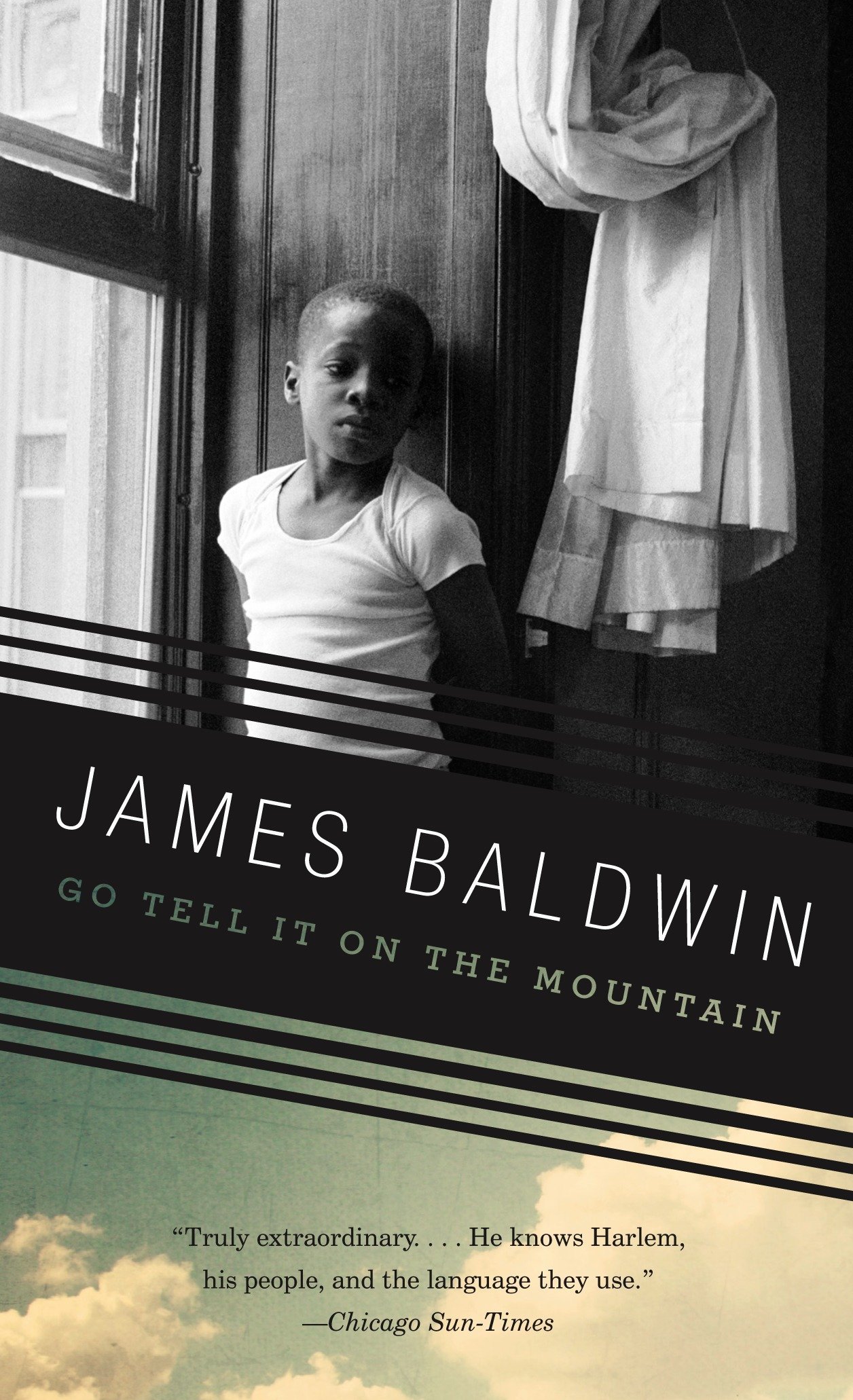
Go Tell It on the Mountain - James Baldwin

"With lyrical precision, psychological directness, resonating
symbolic power, and a rage that is at once unrelenting and compassionate, Baldwin chronicles a fourteen-year-old boy's discovery of the terms of his identity as the stepson of the minister of a storefront Pentecostal church in Harlem one Saturday in March of 1935. Baldwin's rendering of his protagonist's spiritual, sexual, and moral struggle of self-invention opened new possibilities in the American language and in the way Americans understand themselves."

This is my second Baldwin and I am again shocked by the brilliance of his work. He writes with such searing prose and honesty to the human condition. An eye opening mix of brutality, rawness, and elegant eloquence. 

Though I must be entirely honest, I was not as blown away by this book as by 'Giovanni's Room' though I think that was because of my own personal experience. I related more to the struggles of Giovanni's room then to the religious mania and pressure of 'Go Tell It on the Mountain', having not been raised in a religious environment. 

The structure of the book was unique, with most of the action happening in one evening as the family comes to church to pray together and we get to know what each one is praying for and their backstory as to how they got to this point. Allowing Baldwin a  huge amount of range explore different themes in different peoples lives, and we come to understand, if not condone everyone's actions.  The screaming hypocrisy of Gabriel’s brand of evangelism made me absolutely furious, but I also felt very moved by his story. And I loved Florence and Elizabeth's stories; their lives were hard and bitter, and the strength and sacrifice they needed to make to survive was impressive and heart-breaking. We tend not to think much of parents before they were parents, and I am always fascinated with the exploration of their own lives and sufferings, and how all that stuff inexorably trickles down: Baldwin may have never forgiven his father, but in this book, he gives Gabriel the grace of having his pain and guilt acknowledged.

This book does not have an agenda on race, religion, class, violence, or sexuality. This book is about these things, but they are never in the driver's seat, because the characters are. The characters are the glue between the intersection of these numerous difficult themes, and they show how out of these things arises an insurmountable complexity, an ambiguous amorphous blob of feelings.

I must speak about the amazing amount of attention and quality of the actual words that make up Baldwin's sentences. His prose is absolutely masterful, mimicking the flow and imagery of sermons. It give the whole book a weight and seriousness, and it also shows how imbedded these characters are within the church. The vocabulary of faith has worked itself into their mental spaces. 

Age Rating 15+. Some very serious themes such as abuse, rape, race, lynching, sex, addiction and abandonment. There is also some strong language. 

Wednesday, 22 June 2022

The Well of Loneliness - Radclyffe Hall

"Stephen is an ideal child of aristocratic parents—a fencer, a horse
rider and a keen scholar. Stephen grows to be a war hero, a bestselling writer and a loyal, protective lover. But Stephen is a woman, and her lovers are women. As her ambitions drive her, and society confines her, Stephen is forced into desperate actions." 

I' m conflicted about this book. On one hand I enjoyed the writing style, it was elegant and there were some genuinely beautiful and moving passages. The subject matter of queerness and gender non-conformity is dear to my heart, and I deeply related to many of Stephan's struggles which Hall expresses and explores with skill. 

However, the plot drags in the middle, and the opinions expressed are one-sided. Stephan is at least slightly an autobiographical representation of Hall and this gives the book a great emotional weight. But it also closes Hall's ability to write other points of view. The side characters of Wanda and Valerie are fascinating and show opposing reactions to living as a queer women in the early 1900s. I thought that with their introduction, Hall would explore some of the different view-points within the queer community at the time. But no... not at all. A thoroughly missed opportunity I feel, as the side characters turn out to serve no narrative purpose at all. 

I have to be honest that I didn't feel that this was accurately categorised as a lesbian book, though I understand why it was. Our understanding of people and psychology has come along quite a ways. I personally believe that Stephan, and possibly Radclyffe Hall in extension, weren't lesbians but transgender men that didn't have the words. The book itself talks about inverts and the "normal" women that fall in love with them. This also makes sense when looking at Stephan's attitudes to gay men which is frankly down right homophobic. If you read this as a transgender man hating that these man have what they don't i.e. a male body yet are "squandering" it by being feminine, then this makes more sense. Though it is by no means condonable. 

I could not help but be shocked at some of the hypocrisy, the books striving for acceptance of a minority while at the same time there is an underlying attitude of snobbishness and chauvinism towards other minorities. Stephan had certainly taken in the classist dogma of much of the landed gentry and would have been downright awful if she had been born male as her gender non-conformity was the only thing that gave her any self doubt/ interesting foibles. 

Age Rating 14+ Nothing untoward. 

Monday, 16 May 2022

The Discovery of Witches (All Souls #1) - Deborah Harkness

"Deep in the stacks of Oxford's Bodleian Library, young scholar Diana
Bishop unwittingly calls up a bewitched alchemical manuscript in the course of her research. Descended from an old and distinguished line of witches, Diana wants nothing to do with sorcery; so after a furtive glance and a few notes, she banishes the book to the stacks. But her discovery sets a fantastical underworld stirring, and a horde of daemons, witches, and vampires soon descends upon the library. Diana has stumbled upon a coveted treasure lost for centuries-and she is the only creature who can break its spell."


This book genuinely put me into a reading slump. I really tried to persevere, as the plot hooks of what was in the manuscript and what happened to Diana's parents kept me engaged. However, I...I just couldn't anymore and actually had to put it down. Harkness's glacial pacing and repetitive/obsolete descriptions where enough for me to start clocking out. The descriptions of multiple wines, intimate knowledge of Diana's exercise routine and a Wattpad like fascination while wardrobe descriptions padded this book far beyond it's warranted length. I am no enemy to atmosphere, slow pacing or heavy descriptions. I have read my fair share of 19th century novels to fine with that. But none of this description actually does anything, it serves little to no narrative purpose. 

What irritated me the most, however, was Harkness's characterisation. At first, I thought that this book was going to be an intelligent Twilight for grown-ups. The female lead is Diana, is a highly intelligent woman and well respected in her field. She’s also the daughter of two powerful witches who were murdered when she was seven years old. The main character wasn't helpless, thought for herself, didn't immediately adore her bloodsucking, murderous stalker or find his abusive behaviour endearing, and didn't seem interested in losing her entire identity to the first good-looking guy who wanted to eat her. A rebuttal of Twilight, almost.

But no. Despite Diana's increasing Mary Sue-ishness as she develops every witch ability ever known, she must constantly be rescued and protected by Edward, er, Matthew.

Matthew, meanwhile, is a complete jackass. (Excuse my French) Trotting out the obnoxious "pack mentality" trope so often used in "paranormal romance" (a genre that really, really needs to be marked better so that those of us looking for "urban fantasy" won't be blindsided every damn time), Matthew is neatly absolved from all responsibility for his sexist insistence that Diana obey him as her husband and for his volatile, potentially murderous temper if and when she doesn't comply. Who doesn't want a hyper controlling boyfriend that keeps a huge amount of secrets, keeps important information away from you, uses his temper to make you obedient and says, “I might not be able to control myself if you step away” after a first kiss. Diana is the otherwise highly intelligent woman who acts like a child whenever she’s in his presence. She has to be bullied and bated into using her powers, and saved time and time again by Matthew. Despite Matthew’s continual marvelling about how powerful and strong she is, her strength is barely in evidence.

It is really unfortunate. I am a sucker for academic settings (having lived in Oxford myself), urban fantasy and the general aesthetic of this book was wonderful. Large French castles, ancient libraries, large dysfunctional vampire families (wish there was more of that), horse riding. All right up my alley, with the potential to be something really amazing. A fusion of urban fantasy and dark academia. Unfortunately Harkness's characters and pacing completely threw me off. 

Age Rating 16+. Violence, sex, threat, torture (very tame though.)

The Never Ending Story - Michael Ende

"Only the right name gives beings and things their reality. A wrong
name makes everything unreal. That's what lies do.

Bastian is nobody's idea of a hero, least of all his own. Through the pages of an old book he discovers a mysterious magical world - a world of dragons, monsters, witches and giants. A world that is doomed unless a human can save it. Can Bastian succeed in battling terrible foes and find the strength he needs to give the Empress a new name?" 

I enjoyed a huge amount of this book. However, I must admit that I understand why the movie decided to change where the story ended. The first half of the book is truly amazing and I loved every minute of it. However once Bastian has been taken into Fantasia, things started to get rather wobbly from a plot point of view. While still incorporating a huge amount of stunning imagery and fun ideas, the plot felt aimless and only loosely tied together. Bastian wanders from place to place, scenario to scenario with no drive or purpose. I understand what Ende was trying to express, he used a very old folklore theme, of the corrupting influence of power and finding the joy of your own identity. However I don't think this theme was as well expressed as the theme of the importance of imagination and creativity expressed in the first half. 

I must say that Ende certainly knows his mythology/ folklore. I recognised many themes, emotional motifs and plot beats from other stories. Quite similar to the Arthurian legends. 

Age Rating 13+. Nothing untoward but some emotionally intense scenes.